The Future of Agentic AI in Scientific Discovery
The Future of Agentic AI in Scientific Discovery
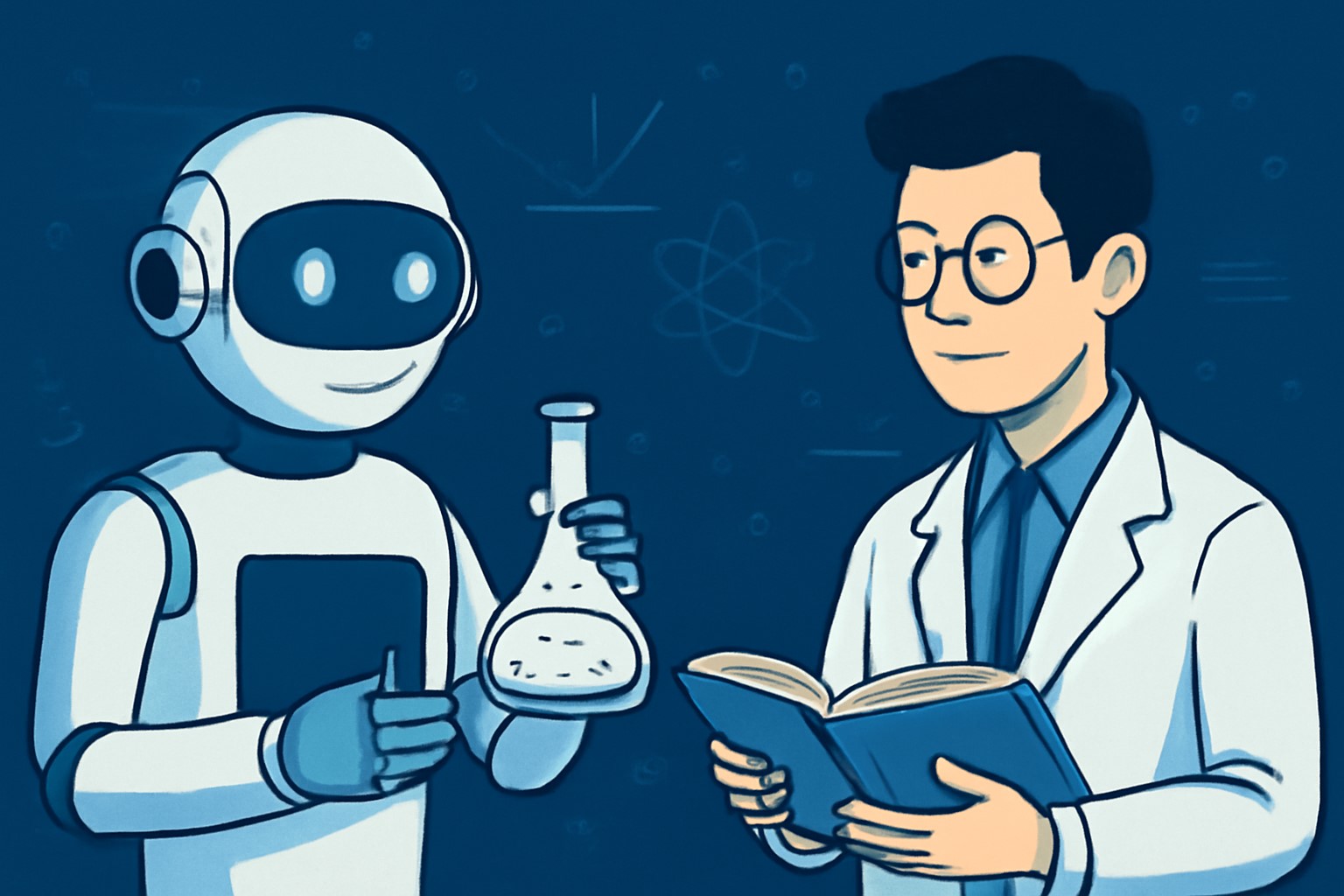
Ever wondered what would happen if Einstein had an AI lab assistant? Not the clunky "search Google" type - but a curious, tenacious, and self-improving companion, tirelessly tinkering at the edges of the unknown? Welcome to the dawn of agentic AI in science.
We're standing at a peculiar crossroads in human history. AI can already draft your emails, suggest recipes, and even play therapist if you're lonely enough at 2 AM. But ask it to actually discover something new - a molecule that cures a disease, a theorem that unravels quantum gravity - and things get trickier.
The problem isn't data. We have more data than humanity could digest in a lifetime of lifetimes. The problem is agency.
Agentic AI isn't just another hype term. It's a quiet revolution - one that's poised to transform scientific discovery itself. Instead of passively waiting for instructions (like traditional AI), agentic systems set goals, explore, learn from failures, and autonomously course-correct. Think less "giant calculator," more "intellect on a leash."
And the leash? We're already loosening it.
From Algorithms to Autonomous Researchers
Today's scientific AI mostly helps with pattern recognition: "This molecule looks promising," "This experiment shows a correlation," "Here's a faster simulation." But the heavy lifting - the intuition, the questioning, the creative leaps - is still done by human scientists.
Agentic AI aims to flip that script.
Imagine AI agents that:
- Formulate hypotheses based on gaps in the literature.
- Design experiments to test them - without waiting for you to prompt.
- Analyze results, notice anomalies, and pivot strategies without human intervention.
- Propose theories that even their creators didn't foresee.
Not in decades. In the next few years.
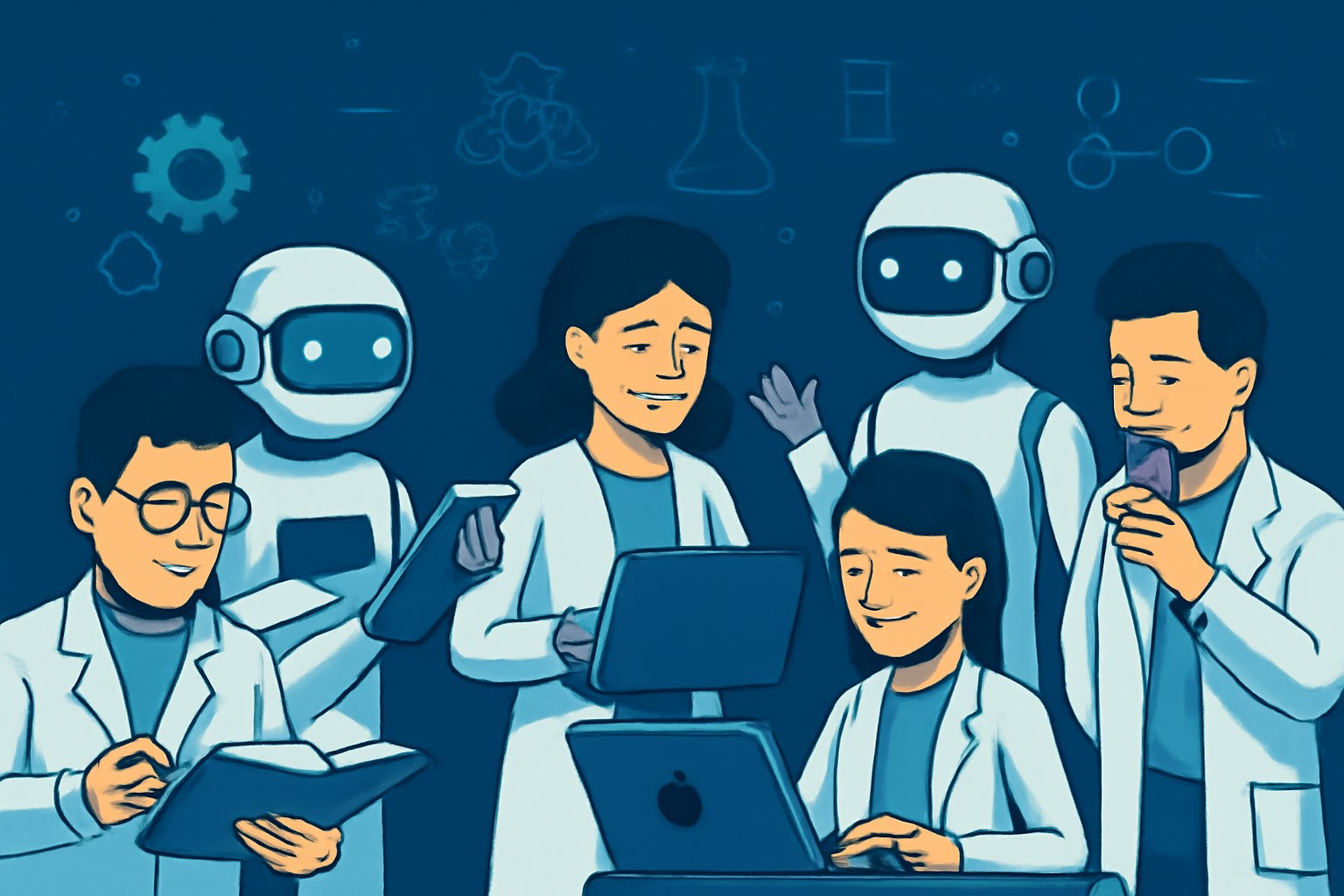
The future of scientific discovery won't be "humans using AI." It'll be teams - part human, part agent - collaborating like scientific jazz ensembles, riffing, challenging, and building on each other's insights.
Why Now?
Three tectonic shifts make this possible:
- Large Language Models (LLMs) got weirdly smart. GPT-like models don't just parrot facts anymore; they reason (clumsily, but improving fast). Give them a toolbox, a mission, and some reinforcement learning, and they start acting less like search engines and more like overeager postdocs.
- Autonomous frameworks are maturing. Technologies like LangGraph, AutoGPT, and open-ended RL agents aren't just toys anymore. They're building architectures of curiosity - agentic loops that think, experiment, and self-evolve.
- Science is desperate for new ideas. From climate change to cancer therapies to understanding consciousness, our challenges have outgrown traditional research cycles. We need thinkers who don't get bored, don't sleep, and don't mind being wrong 99% of the time.
In short: The world needs scientific discovery to speed up. And agentic AI is stepping up.
The Opportunities (and the Mind-Benders)
A future populated by agentic scientific AIs offers thrilling possibilities:
- Microbial civilizations on exoplanets could be theorized and modeled by AI before the first probe even leaves Earth.
- Materials with impossible properties - self-healing, room-temperature superconductors, programmable matter - could be "imagined" by algorithms thinking outside any human box.
- Drug discovery could shift from a decade-long slog to an autonomous sprint, with AI agents proposing, synthesizing, and testing compounds at speeds biotech companies today can barely dream about.
But it also raises head-spinning questions:
- What is authorship? If an AI agent proposes a Nobel-worthy discovery, who gets the prize?
- What is creativity? Can machine "curiosity" count as real curiosity?
- What are the limits? Will there come a day when human scientists are simply too slow, too biased, too… human?
Spoiler: Yes. And that's okay. It just means we'll move up the ladder - from "doing" science to guiding it.
Final Thought: Science as a Multiplayer Game
In the coming years, scientific discovery won't look like a lonely genius scribbling on a chalkboard. It'll be a multiplayer game, with human researchers, AI agents, and hybrid teams exploring vast intellectual universes.
It will be messy. It will be chaotic. It will be glorious.
The future of science doesn't belong to AI alone. It belongs to us - together. To the humans curious enough to dream it, and to the agents tireless enough to chase it.
Get ready. Discovery is about to go supersonic.